
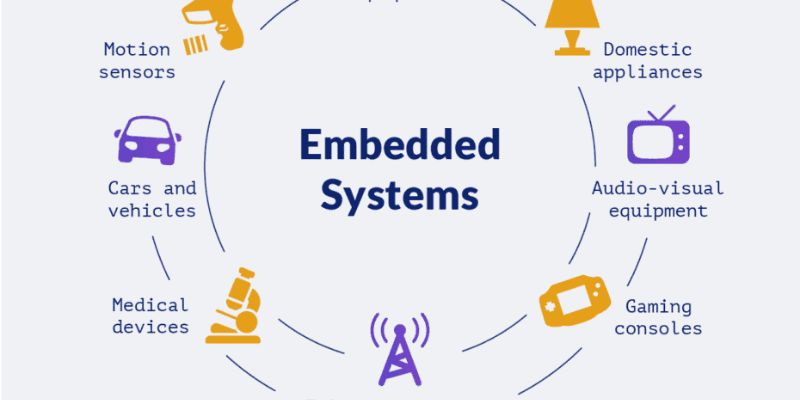
Modern technology in sectors like the Internet of Things, automotive, healthcare, robotics, industrial automation, and consumer electronics is largely powered by ARM embedded systems. Because of their performance, scalability, and energy efficiency, ARM processors are widely used in everything from smartphones and smartwatches to medical equipment and autonomous systems. The need for qualified ARM Embedded System developers is growing quickly as industries continue to adopt connected and intelligent devices.
Developing hardware-aware software that works directly with microcontrollers, sensors, memory devices, and communication interfaces is known as embedded system development. To create reliable and effective applications, developers working with ARM-based systems need to be proficient in both software programming and hardware integration. FITA Academy supports learners in developing embedded programming skills, microcontroller knowledge, hardware interfacing expertise, debugging techniques, and workplace readiness through practical sessions and mock interviews. Even though embedded development may seem complicated at first, learning the proper concepts and tools can make the process much easier.
Understanding ARM Architecture
Understanding ARM architecture and how embedded systems work is one of the first steps towards developing successful ARM embedded systems. Reduced Instruction Set Computing (RISC) architecture, which emphasizes simplified instructions for quicker execution and reduced power consumption, is the foundation of ARM processors. Because of this, ARM processors are perfect for devices with limited resources and battery life. The Cortex-M, Cortex-A, and Cortex-R series of ARM architectures are commonly used for microcontrollers, application processors, and real-time systems, among other applications. Hardware and software are combined in embedded systems to effectively carry out specific tasks in particular environments.
Tip 1: Choose the Right ARM Processor for Embedded System
One of the most crucial choices in embedded system development is choosing the appropriate ARM processor or microcontroller. Processing power, memory, connectivity, and energy efficiency vary depending on the project. For instance, sophisticated multimedia systems might require powerful Cortex-A processors, but basic sensor-based applications might only need low-power Cortex-M microcontrollers.
Before choosing hardware, developers should carefully consider project requirements like processing speed, RAM size. Embedded System Courses in Chennai offering practical, industry-focused guidance in microcontrollers, embedded programming, hardware interfacing, debugging techniques, and real-time project development. Communication interfaces, GPIO support, and power consumption. Hardware choices are also heavily influenced by development board availability and cost considerations.
Tip 2: Set Up a Reliable Development Environment
When developing ARM embedded systems, a well-configured development environment increases efficiency and decreases troubleshooting problems. Installing integrated development environments (IDEs) like Keil uVision, STM32CubeIDE, MPLAB X, or Visual Studio Code with embedded extensions should be the first step for developers. These tools offer project management, debugging, and code editing features made especially for embedded systems. For effective development, it is also necessary to install firmware libraries, debugging tools, and ARM GCC compilers. Developers can directly examine memory, registers, and program execution on ARM devices using hardware debugging interfaces like JTAG and SWD.
Tip 3: Write Optimized and Efficient Code
Code optimization is crucial because embedded systems frequently have limited memory, storage, and processing power. Clean, effective C or C++ code that minimizes needless resource usage while preserving readability and maintainability should be written by developers. Because memory leaks and excessive allocations can impact system stability, effective memory management is crucial. To increase responsiveness, developers should steer clear of blocking functions and, whenever feasible, employ timers or interrupts.
Execution speed in ARM-based applications can be greatly increased by optimizing loops, cutting out unnecessary computations, and minimizing stack usage. Debugging and maintenance are also made simpler by modular programming techniques. Embedded System Training Institute in Chennai focuses on hands-on, industry-oriented learning to help learners master embedded programming, microcontroller concepts, hardware interfacing, debugging techniques, and real-time project development.
Tip 4: Master Embedded System and Troubleshooting Techniques
Because minor hardware or software flaws can result in unanticipated system failures, debugging is one of the most important skills in ARM embedded system development. Developers should become proficient in the use of debugging tools like serial monitors, oscilloscopes, logic analyzers, and JTAG debuggers. These tools facilitate the rapid identification of memory-related bugs, timing problems, and communication problems. During development, troubleshooting can be made easier by using UART interfaces for logging and diagnostic messages. To precisely identify errors, developers should also be able to examine stack traces, register values, and interrupt behavior.
Tip 5: Focus on Power Embedded System and Memory Management
One of the main factors driving the dominance of ARM processors in embedded system development is power efficiency. Numerous ARM-based devices run on batteries and need little energy to function for long periods of time. Thus, power-saving techniques like sleep modes, clock gating, and dynamic voltage scaling should be used by developers. Reducing needless energy consumption while components are idle is another benefit of effective peripheral management. Because embedded systems frequently have limited RAM and flash storage, memory optimization is equally crucial. So this is what ultimate guide to embedded system is about. When possible, developers should minimize the use of global variables, optimize data structures, and steer clear of memory fragmentation.
Tip 6: Learn RTOS and Peripheral Integration
In sophisticated ARM embedded applications, Real-Time Operating Systems (RTOS) are crucial because they facilitate effective multitasking and time-sensitive operations management. Developers can schedule tasks, control synchronization, and enhance application responsiveness with RTOS platforms like FreeRTOS, Zephyr, and RTX. Developers can create scalable and responsive embedded systems by learning RTOS concepts like task scheduling, semaphores, queues, and mutexes. Because ARM devices frequently communicate with sensors, displays, communication modules, and external hardware, peripheral integration is another essential skill.
Tip 7: Trends and Build Projects
Continuous learning is crucial for ARM developers because the embedded systems industry is changing quickly. Opportunities and challenges are created by the frequent emergence of new microcontrollers, development frameworks, communication protocols, and IoT technologies. Technical blogs, online courses, developer communities, and industry conferences are good ways for developers to stay current. Developing useful projects is one of the best ways to improve embedded development abilities and obtain practical experience. Projects like wearable technology, industrial automation systems, robotic applications, sensor networks, and smart home systems enable developers to put theoretical ideas into practice.
Final Suggestion
For developers interested in real-time application design, hardware integration, and low-level programming, ARM embedded system development presents fascinating prospects. ARM-based embedded solutions are becoming more and more in demand as industries embrace IoT systems, automation technologies, and smart devices. Developers can successfully create effective and dependable embedded applications by comprehending ARM architecture, choosing appropriate hardware, optimizing code, mastering debugging techniques, and learning RTOS concepts.